Meal Plan For Family Of 5: A Flexible Weekly System
Joey Habib · · 11 min read
- meal planning
- family meals
- grocery budgeting
- macro tracking
- protein
A useful meal plan for family of 5 is a week of shared dinners with adjustable portions, ingredients that have a planned second use, and at least one flexible meal for schedule changes. Start by mapping busy nights, food preferences and dietary requirements; then choose meals, check the pack sizes you will need to buy, and estimate the shop using current prices. This approach gives Australian households a menu they can adapt without assuming five people have identical appetites or macro needs.
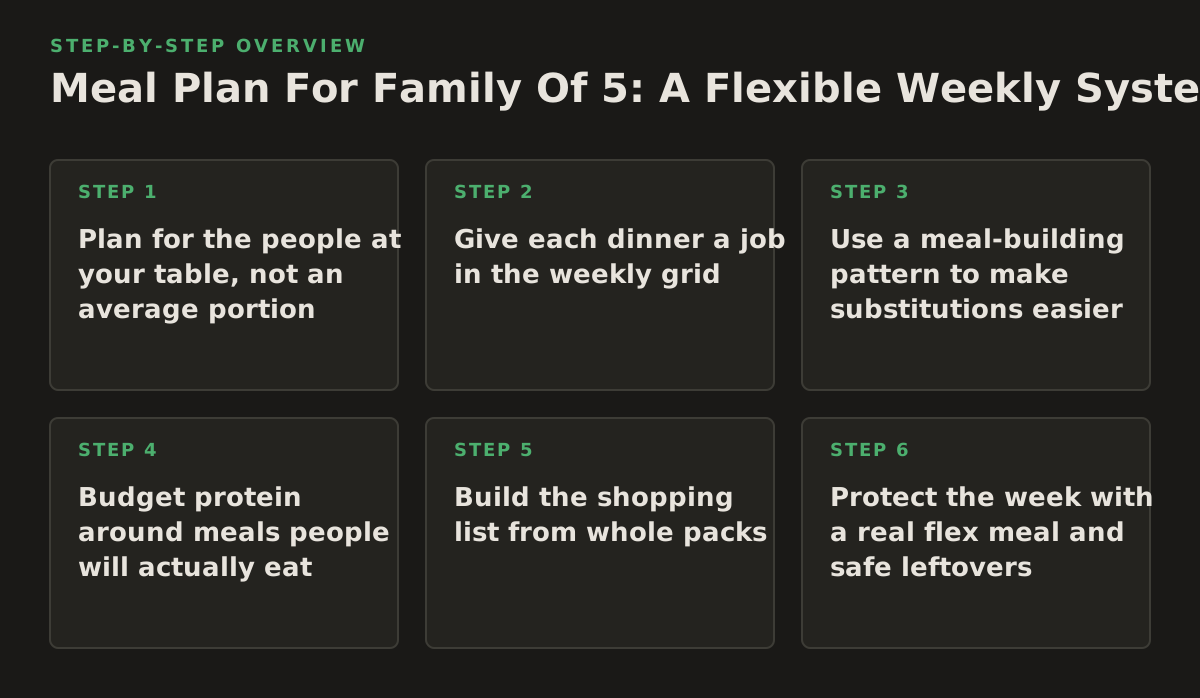
1. Plan for the people at your table, not an average portion
This step matters when a household includes children, adults with different activity levels, or someone tracking macros. The number of diners tells you how many people to feed, but it does not determine identical portion sizes. Plan a shared meal with adjustable components so you can cook once while allowing people to serve amounts that suit them.
For example, a rice bowl can put rice, chicken or tofu, and vegetables on the table separately. One person can take extra rice; another can add beans or yoghurt if those suit the meal. Keep individual macro tracking individual: a household total does not tell you how much any one person needs. For children, avoid applying an adult macro target as a default; Healthdirect’s healthy eating guidance for children provides age-relevant general information, while individual questions can be discussed with a qualified health professional.
Make a household profile before choosing recipes
- Note who is usually home for dinner and which evenings are likely to run late.
- Record allergies, dietary restrictions, strong dislikes and familiar foods that make a reliable backup.
- Mark where portions may need to differ, but leave the amount adjustable at serving time.
Failure mode: multiplying a recipe by five because five people live in the home. That may create too much food on one night and too little on another. As a starting policy, prepare the shared meal and keep one simple extra—such as bread, fruit or cooked rice—available for a hungrier evening. Review what was actually eaten before changing the next week’s quantities.
2. Give each dinner a job in the weekly grid
A grid is most useful when the week includes busy evenings, activities or changing plans. Rather than choosing seven unrelated recipes, assign different jobs to dinners: one meal that makes useful leftovers, one quick pantry option, and one movable or freezer meal. This creates structure without making every night a commitment.
Here is an illustrative sequence, not a prescribed menu or portion plan:
- Monday: roast chicken or baked tofu with potatoes and vegetables; set aside a suitable extra portion if Tuesday can use it.
- Tuesday: wraps with that protein, beans, salad and available toppings.
- Wednesday: tomato and lentil pasta, with optional mince or cheese if wanted.
- Thursday: rice bowls with eggs, tofu or another suitable protein and vegetables.
- Friday: baked potatoes topped with tuna, beans or leftover lentils.
- Saturday: a flexible freezer meal, easy homemade dinner or planned meal out.
- Sunday: soup and toast, or a dinner moved from earlier in the week.
To add variety while keeping the same planning method, find easy homemade recipes can help you find dinner recipes for a weekly meal plan for five people; check each recipe’s ingredients and preparation time before adding it to the shop. The recipe is a candidate, not a reason to buy every ingredient it lists.
Failure mode: filling every evening with a new recipe. That can mean more preparation and one-use ingredients. For example, pair a roast protein with wraps the next day, then leave one dinner movable until you know how the week is going. If the planned leftover is not wanted, move it to lunch or freeze it where appropriate rather than automatically cooking a second full meal.
3. Use a meal-building pattern to make substitutions easier
This principle is useful when you need to make a meal from what is on hand or accommodate different preferences without preparing separate dinners. Think in components: a protein food, a carbohydrate source such as rice, pasta, bread or potato, and vegetables or fruit where they fit. It is a planning check rather than a pass-or-fail plate test.
The Australian Guide to Healthy Eating groups foods into five food groups and can help you review variety across the week; it does not require every dinner to look identical. See the Australian Guide to Healthy Eating when you want to check the broader pattern rather than focus only on protein.
Vary one component at a time
- Protein: rotate among eggs, legumes, fish, poultry, tofu, dairy foods or meat according to preference, budget and dietary needs.
- Base: choose rice, potatoes, pasta or bread based on the meal and what is already in the pantry.
- Produce: combine fresh ingredients with suitable frozen or tinned options so the plan does not depend on every fresh item lasting all week.
For example, lentils can make a pasta sauce more substantial, while beans can be part of a wrap filling. Those are meal ideas, not claims that foods are interchangeable in every diet or recipe. If someone has an allergy or restriction, check each ingredient and substitution against that person’s needs.
Failure mode: buying fresh produce for every dinner without deciding what must be used first. Put the more perishable items into earlier meals and reserve longer-lasting or frozen options for later. If a recipe change leaves a half-used ingredient, assign it to a specific second meal before shopping rather than relying on memory.
4. Budget protein around meals people will actually eat
This is especially relevant for macro-focused shoppers comparing food value. Start with the protein option that fits each dinner, then compare alternatives that the household is likely to use. Cost per amount of protein is one input; pack size, edible amount, preparation, taste and the rest of the meal also affect whether a purchase is useful.
Compare products on the basis of the amount you expect to use, not just the shelf price. A larger pack could have a lower unit cost but still require more money at checkout or leave food without a planned use. Check current product and label details in the shop, since prices, pack sizes and availability can change. Avoid treating one household-wide protein target as a substitute for individual needs.
For Australian Coles shoppers who want to connect meal planning with nutrition targets and grocery estimates, Macronomics is relevant because Macronomics’ beta is designed for Coles shoppers and supports macro-based meal planning and whole-pack cost estimates. Those estimates are planning inputs; check current product details when making the shop.
Failure mode: choosing the lowest cost-per-protein option even when nobody wants it in the planned meal. As an illustrative starting policy, compare one familiar protein with one alternative in a meal where the swap makes sense. For instance, compare beans with mince in a sauce, then consider taste, dietary fit and whether the pack will be used elsewhere before deciding.
5. Build the shopping list from whole packs
A menu may use only part of a pack, but the checkout includes the pack you buy. This difference is easy to miss when estimating the cost of a meal plan for five. Write down both the amount the recipes need and the pack amount you expect to purchase, then give the remainder a destination. Macronomics’ stated whole-pack cost-estimation capability is relevant to this planning problem, but a calculated estimate is not a substitute for checking the current shelf or online price.
Make leftovers visible in the list
- Group ingredients used across more than one meal before choosing pack sizes.
- For each likely remainder, write “use in” followed by a specific meal, or note that it will be frozen if suitable.
- Separate estimated ingredient costs from the actual checkout total so you can see where the difference came from.
For example, if a dinner uses part of a bag of spinach, name the later meal that will use the rest. If a pack of mince is larger than the amount needed for one dinner, plan another use or a suitable way to store the remainder. Do not force an extra meal into the plan if the ingredient will not be eaten.
Failure mode: treating the cheapest unit price as automatic savings. A bulk pack may not suit your storage, schedule or likely use. Compare the full amount due at checkout and the realistic second use; a smaller pack can be more practical if it avoids unused food. Verify prices and pack details close to shopping rather than carrying an old estimate forward as a current price.
6. Protect the week with a real flex meal and safe leftovers
A flexible slot helps when an activity runs late, a meal produces more food than expected or plans change. It works only if the fallback is concrete. Choose an option that fits the household, such as eggs with toast and frozen vegetables, or a labelled meal from the freezer. A flex night is a planned option, not an empty space.
Decide before cooking which meal is meant to create leftovers and when they will be eaten. That makes it easier to avoid cooking extra portions that have no destination. Store and reheat leftovers using current food-safety advice; Food Standards Australia New Zealand’s Food safety and you guidance covers safe food handling for consumers.
Failure mode: writing “leftovers” on the grid without checking what is available or whether anyone wants it. Label the container with its contents and date, place it where it can be seen, and decide whether it belongs at dinner, in a lunch plan or in the freezer. If the planned portion is not used, change the next meal rather than buying ingredients for a duplicate dinner by default.
Use this framework to choose what to plan first
When time, budget and food preferences compete, use the grid below to identify the constraint that should shape the week. It is a selection tool, not a scorecard: solve the most important problem first, then choose meals that fit the others well enough.
| Planning decision | Ask | Useful starting choice | Check before shopping |
|---|---|---|---|
| Busy evening | How much time and attention will be available? | A familiar quick dinner or planned leftovers. | Are the key ingredients already at home? |
| Ingredient reuse | Can one pack serve two different meals? | Pair a roast protein with wraps or bowls. | Is the second use scheduled while the ingredient is suitable? |
| Protein choice | What will people eat, and what suits the meal? | Choose a main option with a practical alternative if needed. | Have pack size and individual portions been considered? |
| Produce | What should be used earlier? | Put more perishable items into early-week meals. | Can frozen or longer-lasting options cover later dinners? |
| Budget | Which planned item is most likely to drive the shop total? | Compare a suitable substitution, not just a cheaper shelf item. | Will the whole pack fit the plan and storage? |
| Uncertainty | What might change during the week? | Keep a movable dinner and a concrete backup. | Is the backup a meal you can actually make? |
For example, if two evenings are likely to be busy, put the quickest familiar meals there before choosing more involved recipes for the rest of the week. If cost is the main constraint, inspect the full-pack cost and second use of the most expensive ingredients. If macro tracking is the priority, compare the nutrition impact of a substitution as well as its cost; neither figure alone describes whether it suits the household.
Failure mode: trying to make every dinner the cheapest, highest-protein and fastest option at once. Those aims can conflict. Choose the main constraint for this week, then let the other meals support it—for instance, keep a quick meal for a late evening and use a more flexible evening for a dish that creates planned leftovers.
Put the plan into action in this order
- Map the week: note who will eat at home, busy nights, dietary requirements and likely changes.
- Assign dinner jobs: choose shared meals, a planned leftover use, a quick option and a concrete flexible meal.
- Choose components: select a protein, base and produce for each dinner, leaving portions adjustable at the table.
- Connect ingredients: name a second use for likely leftovers before adding a pack to the shopping list.
- Estimate the shop: compare recipe quantities with the packs you expect to buy, then verify current product details and prices.
- Review the week: note what was eaten, what went unused, which dinners were difficult and how the checkout differed from the estimate. Change one planning decision next week.
Macronomics is designed to help Coles shoppers relate meal plans and macro targets to whole-pack grocery cost estimates. If that matches your planning needs, Macronomics provides information about its staged beta and waitlist; verify current product prices when you shop.
Authored with NotFair SEO