Macro Friendly Meals: Five Recipes With Estimated Macros
Joey Habib · · 9 min read
- macro friendly meals
- meal planning
- macro tracking
- grocery budgeting
- high protein
Macro friendly meals are meals portioned to fit your own protein, carbohydrate and fat targets. These five ideas include estimated macros per serving, ingredient amounts and the assumptions behind each estimate, so Australian Coles shoppers can compare a meal with their plan before buying ingredients. The figures are approximate, not product-label values: your brand, preparation and actual serving weight can change them.
Choose meals by the macro gap you need to fill
Start with the amounts remaining in your daily plan rather than looking for a meal that is universally “macro friendly.” A chicken-and-rice bowl may be convenient when you want a lean protein source and a measured carbohydrate portion. A tofu and edamame stir-fry has a different balance, including more fat from the tofu. Neither is automatically better; the useful question is whether its estimated macros fit your meal and day.
Protein, carbohydrate and fat all contribute to the meal total, but a recipe estimate is not an individual nutrition prescription. The Australian Dietary Guidelines give broad advice about eating a variety of nutritious foods; they do not make one particular recipe suitable for every person or target (Eat for Health: Australian Dietary Guidelines). If you have a medical condition or need an individual nutrition target, seek advice from an appropriately qualified health professional.
Use this simple comparison before choosing a recipe:
- Protein shortfall: Compare the meal’s protein estimate with the amount you want at this meal. A larger protein portion may help, but recalculate the whole meal.
- Carbohydrate room: Rice, potato, pasta and oats are measured portions you can adjust to suit your plan.
- Fat limit or preference: Measure oil and check the fat in sauces, dairy, meat and plant-protein products.
- Serving size: Decide whether the listed serving is your intended meal or whether you will divide it; logging a full recipe as one serving when it makes two changes every macro total.
For general food choices, consider the meal in the context of the rest of your day rather than judging it by one nutrient. For example, a higher-fat meal might fit a plan with room for fat, while a leaner choice may be easier to combine with foods already planned. These recipes are starting points for comparison, not claims that a particular macro split is ideal.
Five Macro Friendly Meals with estimated macros
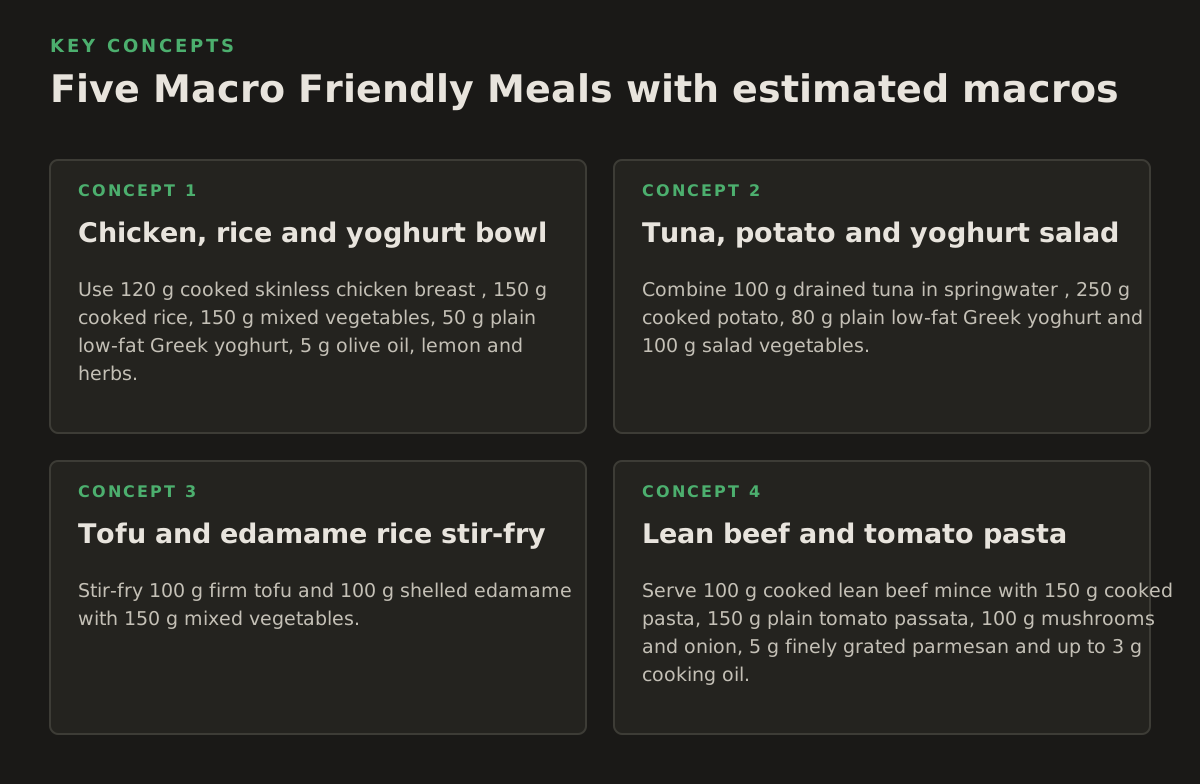
Each recipe below makes one serving. The estimates are rounded, approximate sums based on generic ingredient values, not values published for these exact recipes or a particular brand. Generic food-composition entries can help with ingredient estimates: see the Australian Food Composition Database and USDA FoodData Central. Check your own package labels when you need a closer match. Unless specified otherwise, meat, rice, potato and pasta weights are cooked weights; vegetables are edible portions.
Chicken, rice and yoghurt bowl
Use 120 g cooked skinless chicken breast, 150 g cooked rice, 150 g mixed vegetables, 50 g plain low-fat Greek yoghurt, 5 g olive oil, lemon and herbs. Stir lemon and seasoning into the yoghurt for a quick dressing, then serve the chicken and vegetables over the rice. The estimate assumes unseasoned chicken and rice, vegetables without added fat and plain low-fat yoghurt.
Estimated per serving: 49 g protein, 55 g carbohydrate and 11 g fat. The measured oil contributes fat, so adding another splash is not a neutral change. Chicken thigh, a flavoured yoghurt or a larger rice portion also changes the estimate. If using frozen vegetables, check whether they are plain or include a sauce.
Tuna, potato and yoghurt salad
Combine 100 g drained tuna in springwater, 250 g cooked potato, 80 g plain low-fat Greek yoghurt and 100 g salad vegetables. Add 5 g olive oil, lemon, mustard or herbs. The estimate assumes the tuna is drained, the potato is boiled or baked without added fat, and the yoghurt is plain and low-fat.
Estimated per serving: 40 g protein, 58 g carbohydrate and 8 g fat. Tuna packed in oil or a richer dressing can raise the fat total; a different tuna or yoghurt product can alter protein too. Use the drained weight for the tuna and avoid treating the can’s net weight as the amount of fish in your portion.
Tofu and edamame rice stir-fry
Stir-fry 100 g firm tofu and 100 g shelled edamame with 150 g mixed vegetables. Serve with 120 g cooked rice, 15 g soy sauce and 2 g oil. Frozen vegetables and edamame can simplify preparation, but check that the edamame portion is shelled and that the vegetables do not come with an uncounted sauce. The estimate assumes firm tofu and no extra oil.
Estimated per serving: 36 g protein, 58 g carbohydrate and 17 g fat. Firm tofu products vary, and tofu contributes to the fat estimate as well as protein. This is not a direct macro-for-macro replacement for the chicken bowl: if you swap meals, compare all three totals using the tofu and edamame labels.
Lean beef and tomato pasta
Serve 100 g cooked lean beef mince with 150 g cooked pasta, 150 g plain tomato passata, 100 g mushrooms and onion, 5 g finely grated parmesan and up to 3 g cooking oil. Brown the mince and vegetables, add passata, then serve with the pasta. The estimate assumes plain pasta and passata without added oil; “lean” mince is not a single standard fat level, so use the pack’s nutrition information to refine the result.
Estimated per serving: 41 g protein, 60 g carbohydrate and 17 g fat. A fattier mince, extra cheese or a larger pasta serving will change the totals. For a batch, add the ingredients’ macros for the full amount and divide by the portions actually served; do not assume a pot automatically makes a particular number of servings.
Protein overnight oats with berries
Illustrative example: Mix 40 g rolled oats, 170 g plain 0% Greek yoghurt, 20 g whey powder, 80 g blueberries and 5 g chia seeds. Add water to adjust the texture and refrigerate. The estimate excludes milk and assumes the 20 g portion of whey provides roughly 16 g protein. Powder formulations vary, so use the label for your product rather than assuming every scoop has the same weight or macros.
Estimated per serving: 40 g protein, 49 g carbohydrate and 6 g fat. Count any milk, sweetener or topping you add. If you do not use whey, choose a measured alternative that fits your plan and recalculate the recipe; removing the powder without replacing its contribution makes the listed protein estimate inaccurate.
Adapt a recipe without hiding the macro change
Keep ingredients separate in your tracking entry: a protein source, a carbohydrate source, vegetables or fruit, and measured additions such as oil, cheese or dressing. That makes it easier to see what changed when you substitute an ingredient. Replacing rice with potato changes the carbohydrate source and portion; replacing chicken breast with thigh can also change the fat total.
Change one measured component at a time when you are trying to understand a meal’s effect. If you change both the protein and the side, it becomes harder to tell which adjustment moved the total. These are qualitative examples rather than exact macro guarantees:
- In the chicken bowl, adjust cooked rice while keeping the chicken amount steady if you want to change the carbohydrate portion without deliberately changing the main protein portion.
- In the tuna salad, changing the potato amount changes the carbohydrate contribution; changing the drained tuna amount affects protein as well.
- In the stir-fry, compare the tofu and edamame labels before changing their proportions, since their macro profiles differ.
- In the oats, weigh the powder and berries instead of logging an unmeasured scoop or handful.
For packaged foods, compare the stated serving with the quantity you actually use. Food Standards Australia New Zealand explains the per-serving and per-100-gram information on nutrition information panels (FSANZ: nutrition information panels). The per-100-gram column helps compare products on a consistent basis; the serving column helps estimate what you will eat if your portion matches it. A label is specific to that product, whereas a generic tracking entry may not be.
Match the weight basis in your log. Cooked rice and dry rice are not interchangeable entries, and drained tuna should be logged using the drained portion. If you save a recipe in an app, enter the ingredients as weighed and set the number of servings to the number you actually divide it into. Recalculate after a substitution instead of carrying over the original recipe total.
Plan the grocery shop around whole packs
A recipe portion and a checkout purchase are different quantities. You might use only part of a yoghurt tub, a bag of rice or a pack of vegetables for one meal, but the shop may require purchasing the whole pack. For a weekly plan, add each ingredient across all chosen meals before shopping. This can show where ingredients overlap and where a recipe leaves a remainder to use later.
Use a short planning check before committing to the menu:
- Shared ingredients: Identify foods used in more than one planned meal, such as rice, yoghurt or vegetables.
- Pack quantities: Compare the total recipe amount with the pack size you intend to buy; distinguish the amount used from the amount paid for.
- Storage and timing: Decide which perishable ingredients to use earlier and which ingredients can be stored or frozen according to their packaging.
- Product match: Check whether the product you intend to buy matches the assumptions behind the meal’s estimate.
For a Coles shop, verify the product, price and availability in your own shopping channel before relying on a cost calculation. The estimates in this article do not establish current shelf prices or stock. A useful budget compares the planned pack purchase with the portion cost over the meals in which you expect to use the remainder. That distinction matters especially when a plan looks inexpensive per serving but requires several full packs at checkout.
When comparing higher-protein options, look beyond the protein grams alone. A product’s cost per 100 grams of protein can help compare value, but the result does not tell you whether the product’s other macros, serving size or role in your meals suit your plan. Consider those alongside the cost, and verify the product and price information you are using.
Pick a meal, then verify the numbers you will actually eat
Choose the recipe closest to the macro gap you want to fill, then check whether the portion and ingredient assumptions match your products. If the estimate is close to your plan, use the package labels and measured weights to improve it. If it is not, adjust one component—such as rice, potato, oil or the protein portion—and recalculate rather than treating the original total as fixed.
For a weekly shop, group meals that share ingredients and account for whole packs, not just recipe portions. Macronomics is designed for Coles shoppers planning around macro targets, with tools for meal and grocery cost estimation, whole-pack costs and protein-cost comparisons. Explore Macronomics to learn about the service and its staged beta onboarding.
Authored with NotFair SEO