Coles Whole-pack Grocery Cost Estimate: A Step-by-Step Budgeting Guide
Joey Habib · · 7 min read
- grocery budgeting
- coles
- meal planning
- protein cost
- macro tracking
A coles whole-pack grocery cost estimate starts with what you must pay for at checkout: multiply each product’s pack price by the number of packs your plan requires, then total those purchases. Don’t charge yourself again for ingredients already in your cupboard. In this guide, you’ll turn a week of meals into a pack-by-pack shopping list, separate new spending from pantry use, and compare protein value without mistaking a low unit price for a low bill.
Step 1: Set the week, shop and budget you’re estimating
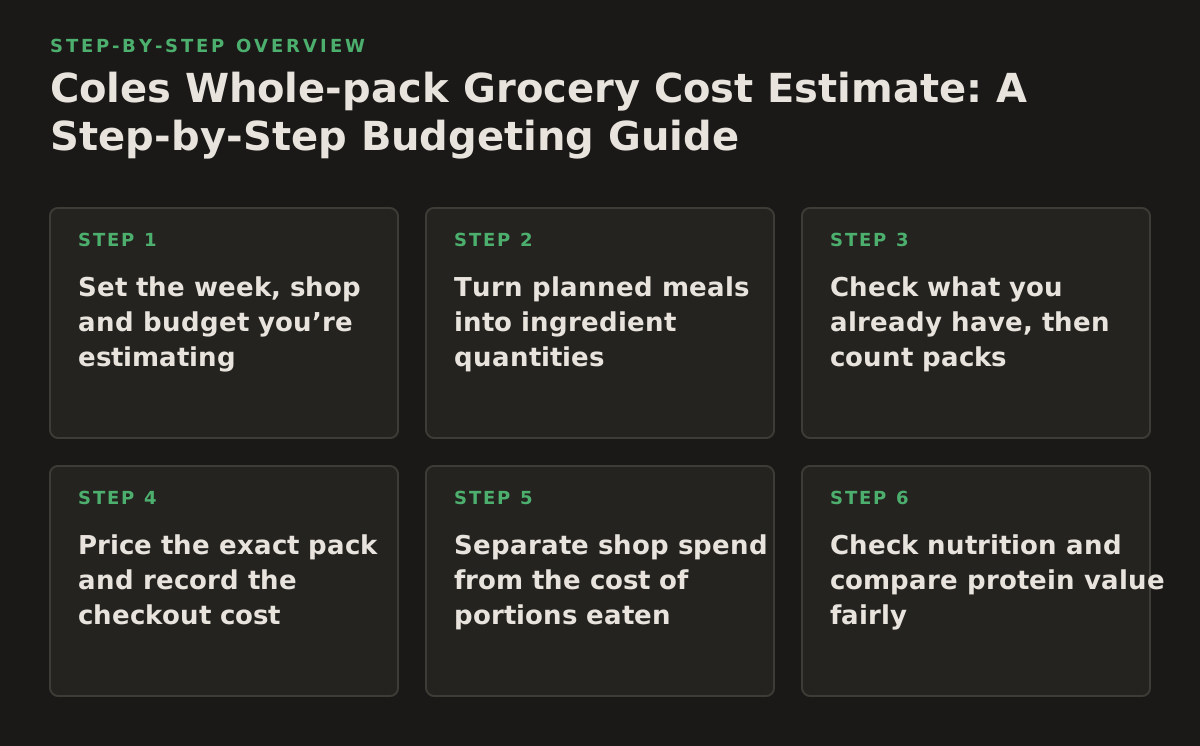
Choose the week you’re planning and the Coles shopping context you’ll use. Prices and product availability can differ by product, store and shopping channel, so treat the figure as an estimate until you check your basket. Start with the relevant Coles listings or basket rather than assuming a price from an old receipt will still apply; the Coles online shop is a place to check listed products and prices in 2026.
Write down your maximum planned spend and whether it covers just food or also household items. Keep delivery charges or other fees separate if they apply to your order: they affect the amount paid but are not part of the food’s pack cost. If several people share the shop, agree whether the estimate covers the whole household or only one person’s meals.
Keep the budget and the meal plan on the same scope
A one-person meal plan compared with a household checkout total will look misleadingly expensive. Note the number of people and meals covered, then use that same scope for every later comparison. If you want a record of meals and food costs together, Macronomics is relevant to that planning task; the pack-counting method below still works in a spreadsheet or on paper.
Step 2: Turn planned meals into ingredient quantities
List the meals you intend to make, then total each ingredient across recipes. For a high-protein plan, record the protein food and the quantity required in each meal rather than buying by a vague target such as “enough chicken.” Keep weights on a consistent basis: if a recipe quantity is raw, compare it with the raw pack weight; if it specifies drained or cooked weight, account for that difference before counting packs.
- Include breakfasts, lunches, dinners and planned snacks—not just main meals.
- Combine repeat ingredients, such as oats used in both breakfast and baking.
- Mark optional meals or substitutions so they do not silently inflate the estimate.
- Check whether recipe quantities are for the whole batch or one serving.
For basic food-group planning, the Australian Government’s Five Food Groups guide (accessed 2026) can help you review what your menu includes. It does not set your grocery budget; use your own meal quantities and prices for that.
Step 3: Check what you already have, then count packs
Before pricing the list, compare required quantities with usable stock at home. A pantry item that is already open may cover part of the recipe; count only the shortfall as a new purchase. This distinction is the difference between food consumed this week and cash needed for this shop.
Use a pack-count rule
For each item, calculate: packs to buy = round up (quantity still needed ÷ usable quantity per pack). “Round up” matters: if the recipe needs more than one pack provides, the estimate must include the next whole pack. For loose produce or products sold by weight, use the quantity you intend to buy and the displayed price basis instead of forcing the item into a fixed-pack calculation.
Unit pricing can help compare similar products on a common basis, but it is not the same as the amount you will pay for a whole pack. The ACCC explains how grocery unit prices are displayed and used for comparisons in its unit-pricing guidance (accessed 2026). Check both the unit price and the pack total: a bigger pack can have a lower unit price while requiring more cash upfront.
Step 4: Price the exact pack and record the checkout cost
Use the pack size and price for the product you would actually put in your basket. Record brand or product, size, price, packs required and extended cost. If the exact item is unavailable, write down the substitute and its price rather than quietly carrying over the old estimate.
| Illustrative item | Meal-plan quantity | Pack and price | Packs to buy | Checkout cost |
|---|---|---|---|---|
| Chicken breast | 750 g | 1 kg, $12 | 1 | $12 |
| Plain Greek yoghurt | 500 g | 1 kg, $7 | 1 | $7 |
| Rice | 300 g | 1 kg, $3 | 1 | $3 |
| Frozen vegetables | 750 g | 1 kg, $4 | 1 | $4 |
| Illustrative checkout total | $26 |
These prices are illustrative arithmetic, not current Coles quotes. In this example, the plan uses 750 g of chicken but the shop buys a 1 kg pack, so the estimate includes the full $12. The unused 250 g is not a discount at checkout; it is remaining stock for later. Keep a separate note of leftovers so your next estimate can count them if they are still usable.
Step 5: Separate shop spend from the cost of portions eaten
The example’s cash outlay is $26, but the ingredients used in the listed meals represent less than the full pack value. If you allocate costs in proportion to quantity used, the example’s ingredient allocation is $9 chicken, $3.50 yoghurt, $0.90 rice and $3 vegetables: $16.40 attributed to the planned quantities. The remaining value stays in the packs for future meals. Use the $26 figure to plan checkout cash and the allocated figure to compare meal costs; don’t mix the two measures.
This split is especially useful for households buying pantry staples or gym-goers batch-cooking several servings. A week with a large oil, rice or seasoning purchase may have a high checkout total even when those packs support many later meals. Conversely, a low checkout total can simply mean you are using stock bought earlier.
- Shop total: the price of all packs you need to buy now.
- Meal allocation: the share of each pack used in this plan.
- Carry-forward stock: the usable amount left for a later plan.
Step 6: Check nutrition and compare protein value fairly
To compare protein foods, calculate the price per amount of protein rather than comparing pack prices alone. A practical formula is: pack price ÷ total grams of protein in the pack × 100. Get the product’s protein figure and serving basis from its Nutrition Information Panel, and make sure the pack quantity and nutrition data describe the same product state. FSANZ explains how to read a Nutrition Information Panel (accessed 2026).
For foods without a label or when you need a general reference, the Australian Food Composition Database provides composition data; its values describe foods in the database, not necessarily the exact Coles product in your basket. Use the database (accessed 2026) as a reference and prefer the product label when it is available. A cheaper protein-per-dollar result may still be a poor fit if the pack is too large to use, does not suit the meals, or pushes your checkout total over budget.
As an illustrative starting policy, flag a product if its displayed price is more than 10% above the price you recorded for the same pack last time. This is a prompt to check a substitute or revise the plan, not a universal cutoff. Adjust the threshold if ordinary price variation triggers constant alerts, or tighten it if a small increase regularly breaks your budget.
- Compare like with like: same pack size, product type and nutrition basis.
- Check whether a special price changes the pack you can realistically use.
- Choose a substitute only if it still fits your recipes, nutrition needs and storage plan.
First, write down the meals and stock you have
Before opening the shop, list this week’s meals and check the fridge, freezer and pantry against their ingredient quantities. Then price only the remaining quantities as whole packs, add the pack costs, and compare that checkout estimate with your food budget. If the gap is too large, change a meal or pack choice and recalculate before placing the order.
For a planning workflow that brings meals, macro targets and grocery costs together, see what Macronomics offers. Use your own current Coles basket prices to make the estimate fit your shop.
Authored with NotFair SEO